


Boomerang AI
Relationship-Led Revenue Platform for B2B Sales Teams
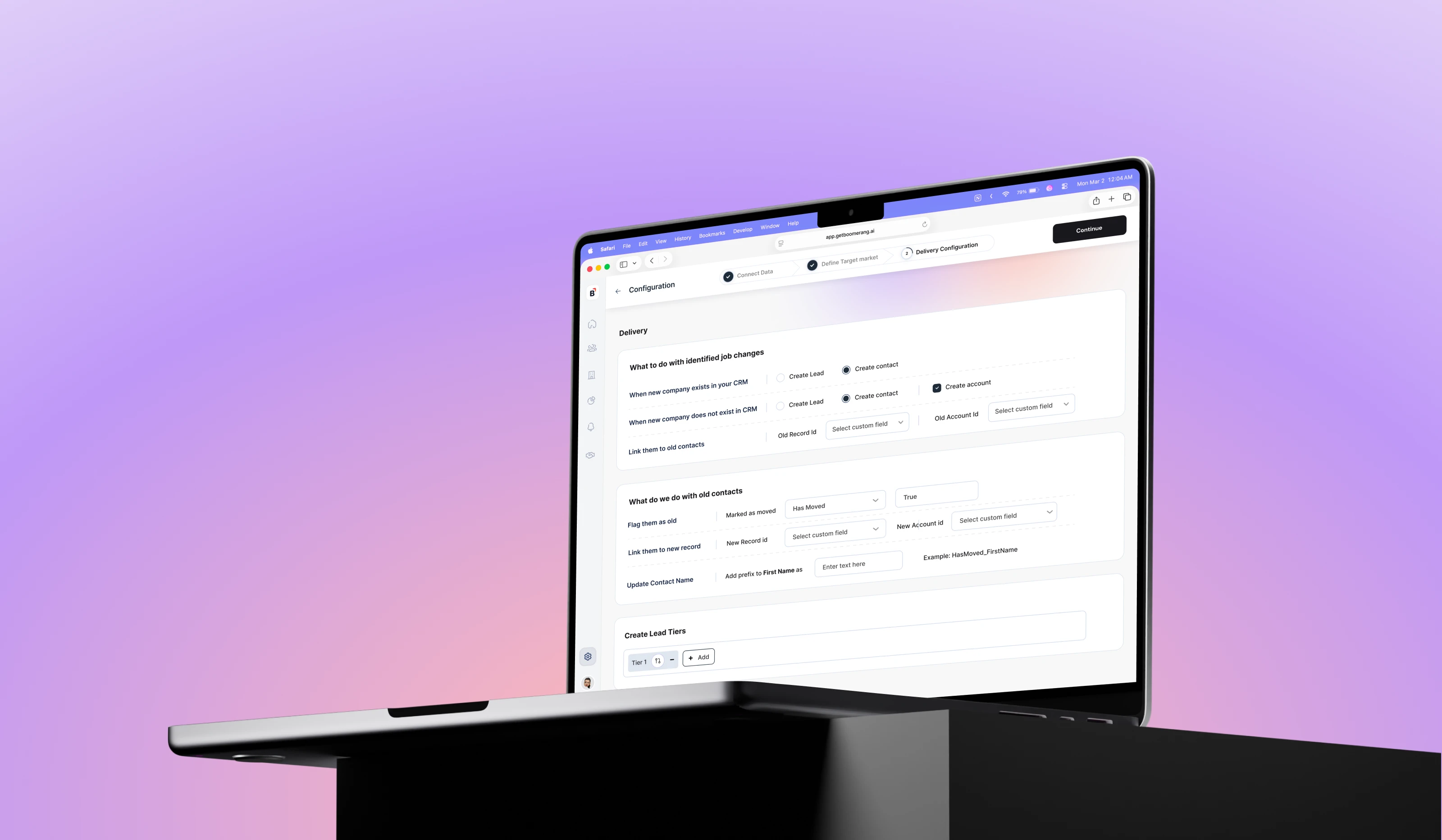
End-to-end product design. Building a modern tool with AI baked in to help teams to get to the right buyer and help them find a warm path to get to the buyer by the power of warm referral.
OVERVIEW
What is Boomerang AI?
Boomerang AI is a relationship-led revenue platform that helps B2B sales and marketing teams convert their professional networks into predictable pipeline. Unlike traditional sales intelligence tools that focus on cold prospecting, Boomerang AI leverages existing relationships, network signals, and AI-driven insights to help revenue teams identify warm pathways to their target accounts.
Built for modern GTM teams, Boomerang AI automatically detects job changes, maps champion relationships, enriches CRM data, and orchestrates personalized outreach plays - turning fragmented signals into actionable revenue opportunities.
THE CHALLENGE
From Cold Lists to Warm Pathways
B2B revenue teams rely heavily on tools like ZoomInfo and LinkedIn Sales Navigator for prospecting, but these platforms present critical gaps: fragmented relationship data across multiple systems, manual CRM maintenance, and cold-heavy outreach strategies that yield low response rates.
The integration problem: Revenue teams already use CRM systems, sales engagement platforms like Outreach, communication tools like Slack, and email but these tools operate in silos. Data doesn't flow between them, forcing teams to manually copy information, switch contexts constantly, and miss critical signals buried across platforms.
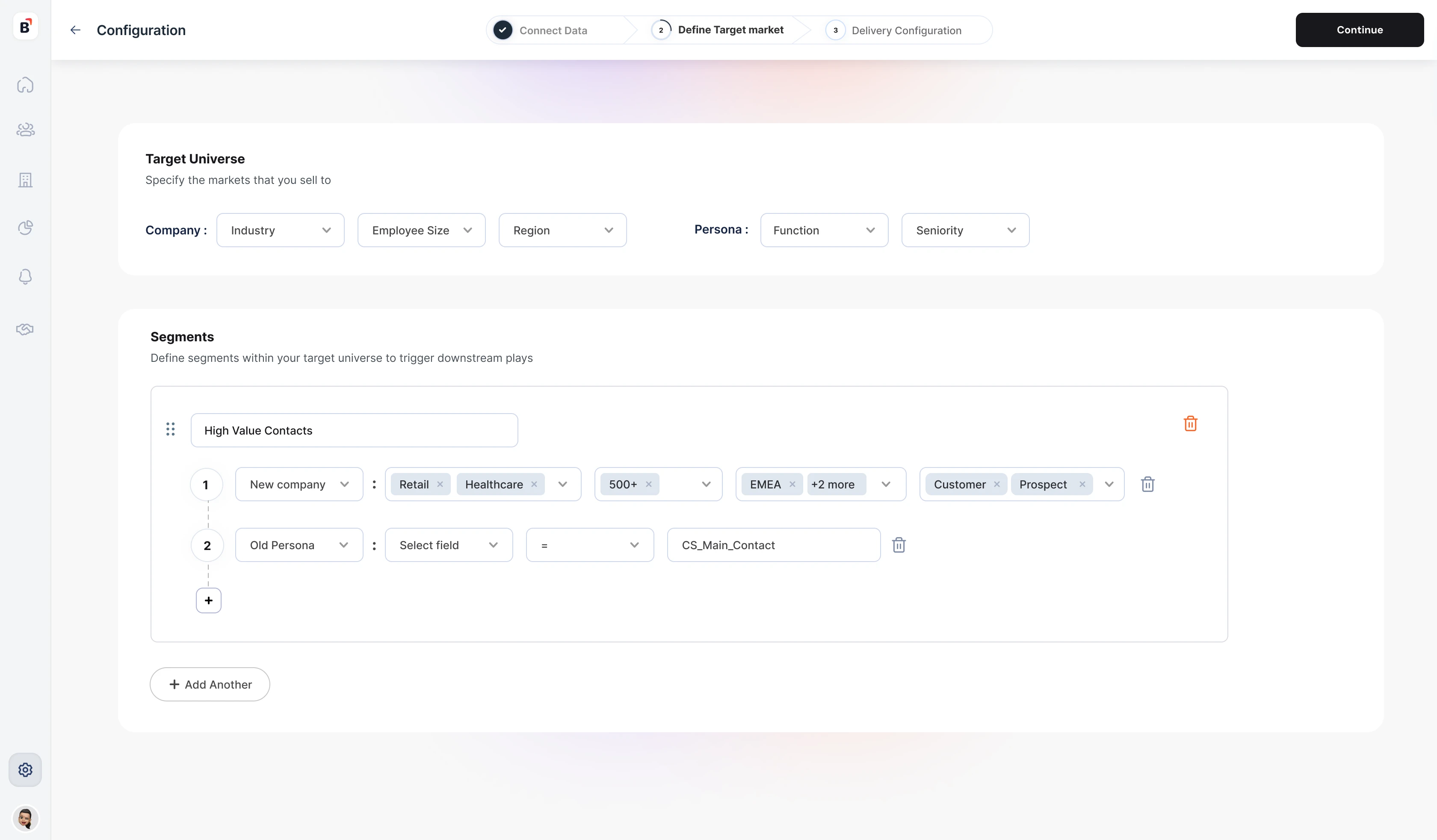
With buying committees growing larger and sales cycles extending longer, the question arose: How might we help revenue teams convert fragmented GTM signals into prioritized, actionable, and relationship-driven pipeline opportunities without disrupting their existing workflows?
DESK RESEARCH
Competitor Study
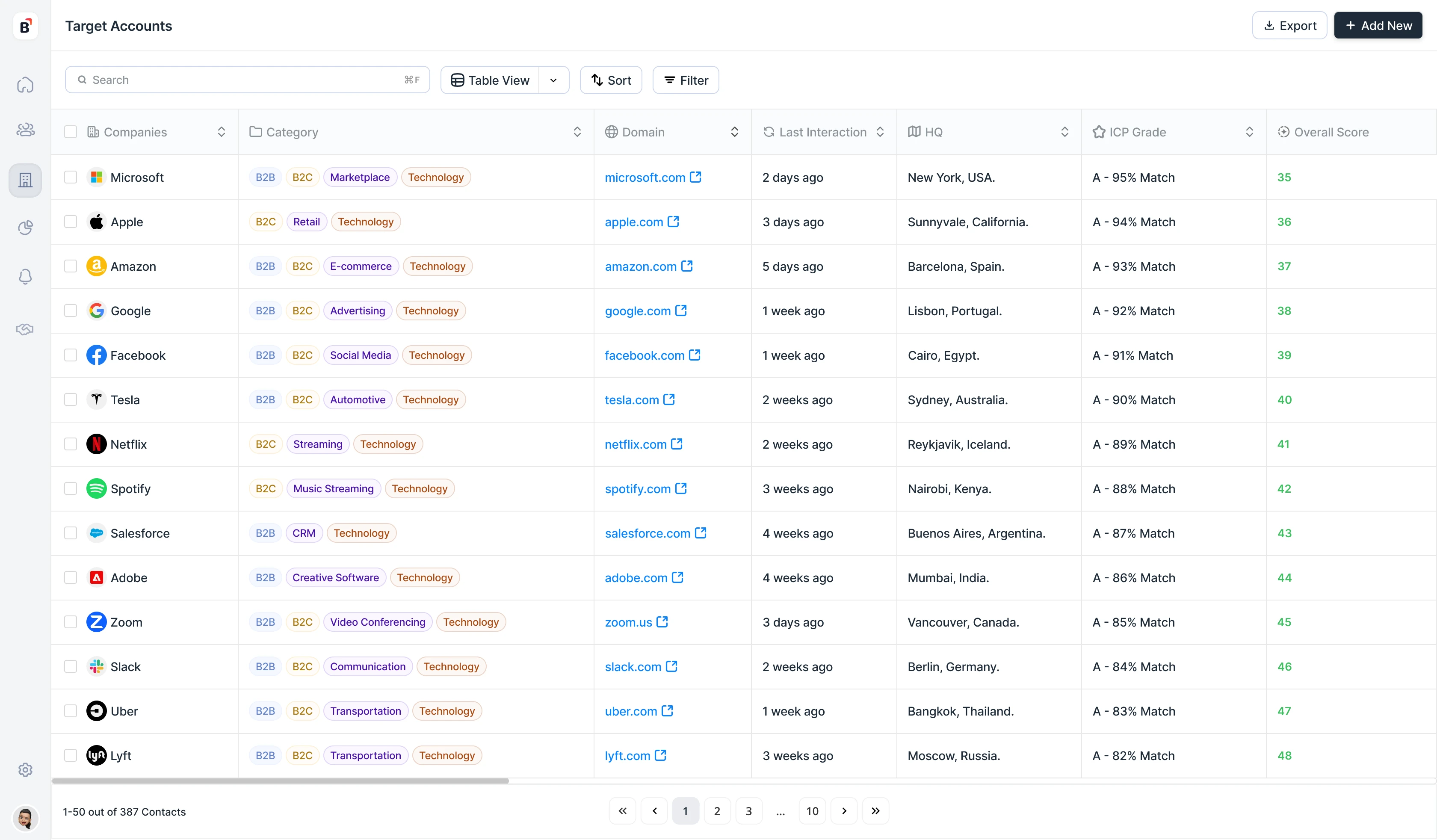
To establish a value proposition through market research, I identified the key players in the sales intelligence and revenue operations space and analyzed their core offerings.

STRENGTHS
- Large B2B contact databases (ZoomInfo)
- Job change alerts and social signals (LinkedIn Sales Navigator)
- CRM integrations and data enrichment capabilities
- Account-based marketing features
- Intent data and buying signals
WEAKNESSES
- Static contact data with limited relationship context
- No automated relationship pathway mapping
- Heavy reliance on cold outreach strategies
- Manual CRM hygiene and enrichment workflows
- Limited orchestration of warm intro plays
- Poor signal-to-action conversion
PRIMARY RESEARCH
User Goals and Pain Points
To understand how we could best tackle and bridge gaps in the existing market, I conducted interviews with RevOps leaders, sales reps, and customer marketing teams across mid-market and enterprise B2B companies. Within this user group, I identified and synthesized the following insights:

ANALYSIS
Relevant Intervention Areas
Guided by UX research and understanding business goals, we turned the found insights to actionable opportunity areas for our designs.
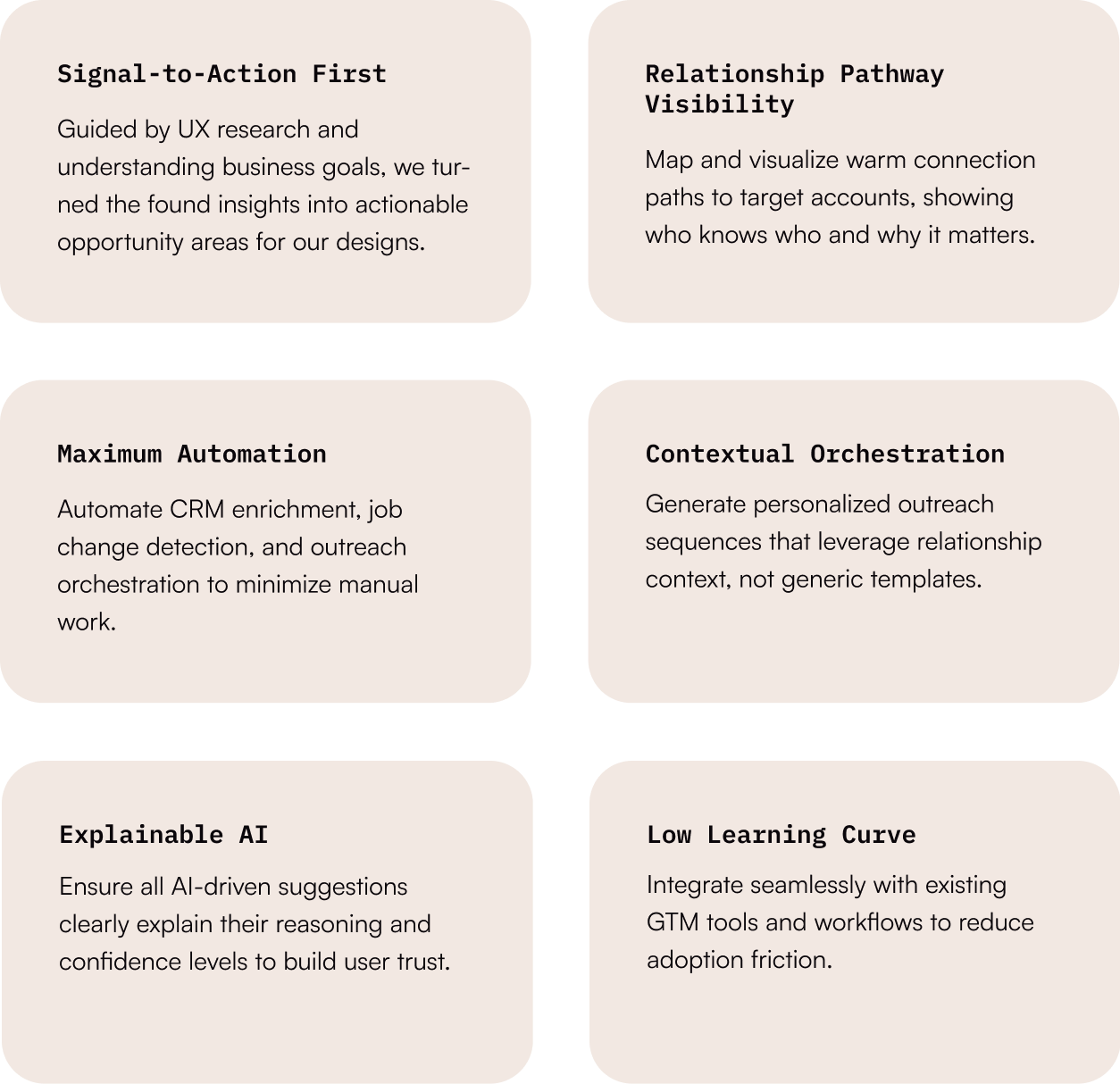
refined problem Statement
How might we help revenue teams turn their professional networks into predictable pipeline by automating relationship detection, CRM enrichment, and warm outreach orchestration?
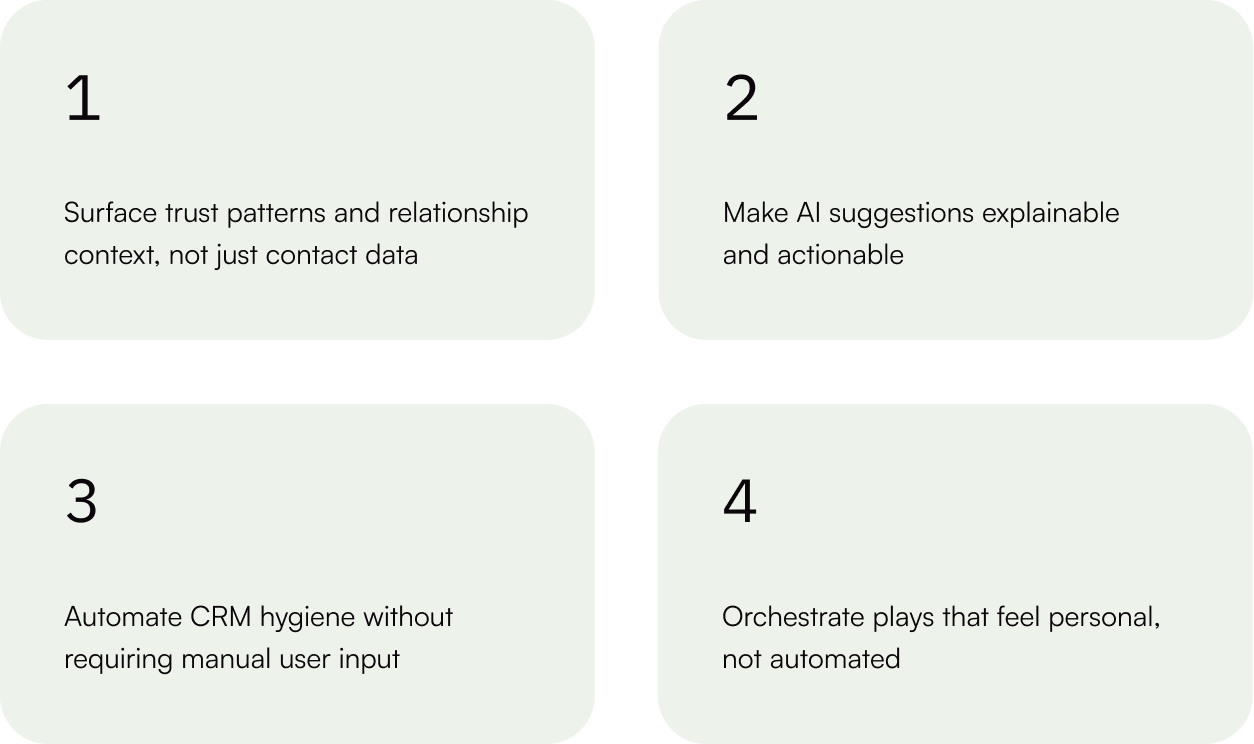
APPROACH
With the actionable insights and opportunities in hand, we devised key principles to be followed while designing.
THE SOLUTION
A relationship-led revenue platform that integrates directly into existing GTM workflows (CRM, Outreach, Slack, email) to automatically detect network signals, map champion pathways, enrich CRM data, and orchestrate warm outreach plays - enabling revenue teams to convert trusted relationships into predictable pipeline without leaving their tools.
JOB CHANGE & CHAMPION DETECTION
Real-Time Revenue Signals
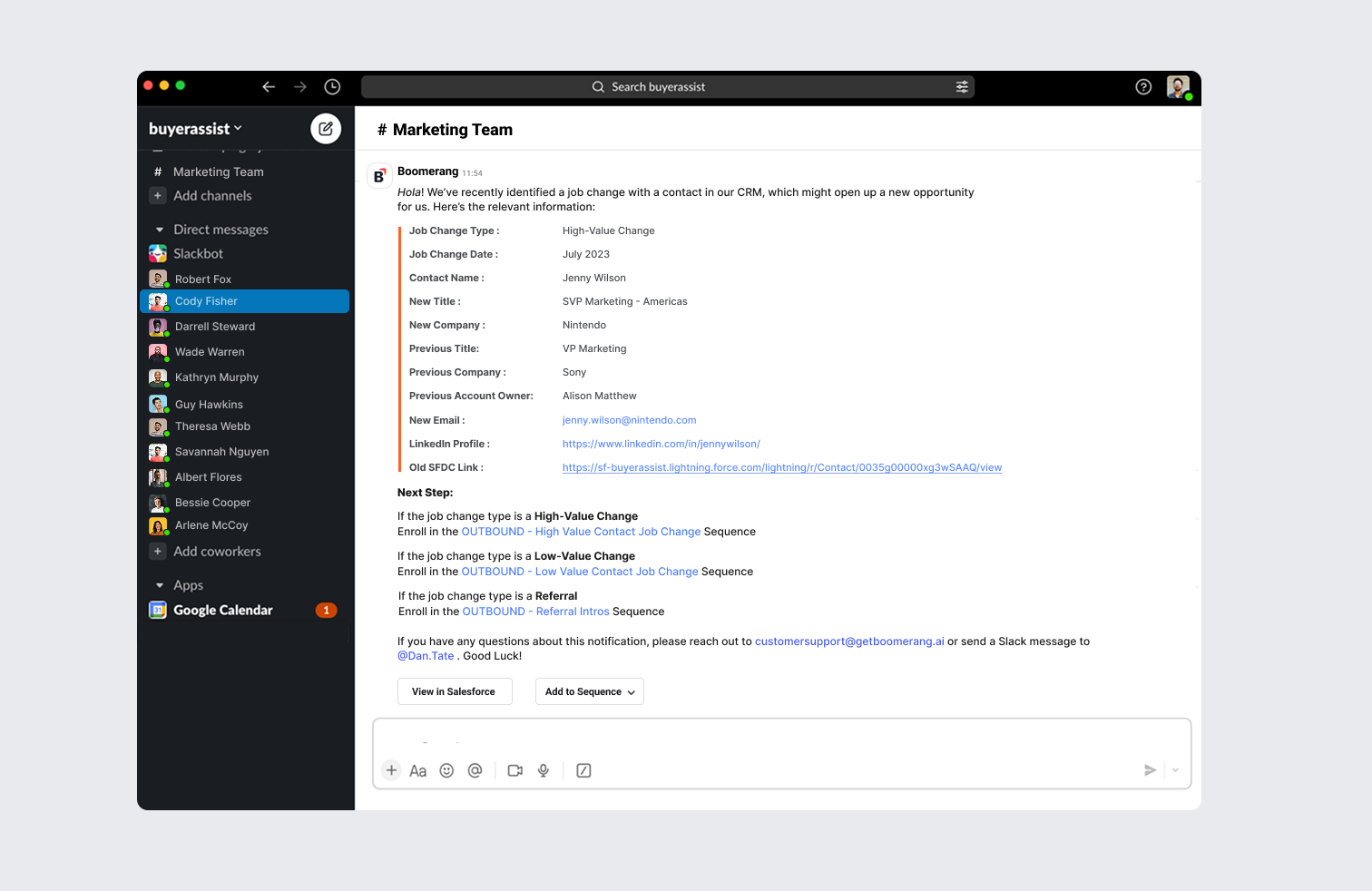
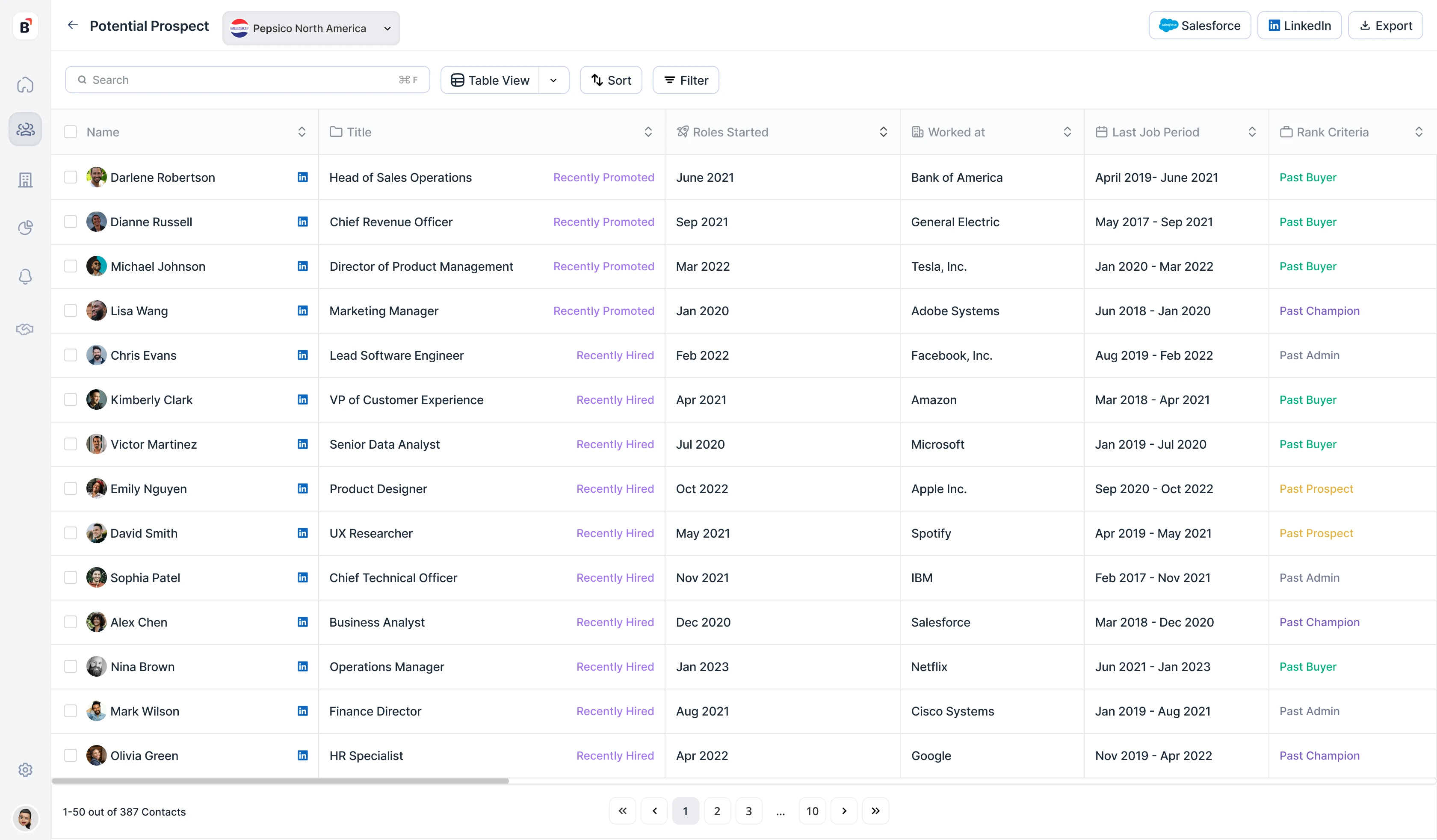
This module monitors email metadata, public profiles, and calendar connections to automatically detect when key contacts change jobs or when previous champions enter target accounts. These real-time signals feed high-confidence outreach plays, ensuring teams never miss a warm opportunity.
Multi-Channel Notifications: Job change alerts are delivered where teams work — Slack notifications for immediate visibility, email digests for weekly summaries, and automatic CRM record updates for seamless workflow integration.
Key Features:
- Real-time job change alerts with CRM auto-sync
- Champion movement tracking into target accounts
- Historical job change timeline for context
- Automated notification routing via Slack and email
- Instant CRM record updates to keep account data current
- Automated account owner assignment for new opportunities
CRM HYGIENE & ENRICHMENT
Automated Data Quality
The CRM Hygiene & Enrichment module automatically cleans and enriches CRM data without manual user input. Smart duplicate resolution, contact enrichment, title updates, and stale data flagging significantly reduce the hours revenue teams spend on manual data maintenance.
Seamless CRM Integration: All enrichment updates sync bi-directionally with Salesforce, HubSpot, and other major CRMs ensuring teams always work with clean, up-to-date data without leaving their CRM interface.
Key Features:
- Automated duplicate detection and merge suggestions
- One-click contact enrichment with preview cards
- Title and company updates with change tracking
- Confidence scores for enrichment quality
- Stale data flagging and cleanup recommendations
GTM INTEGRATION STRATEGY
Work Where Revenue Teams Already Are
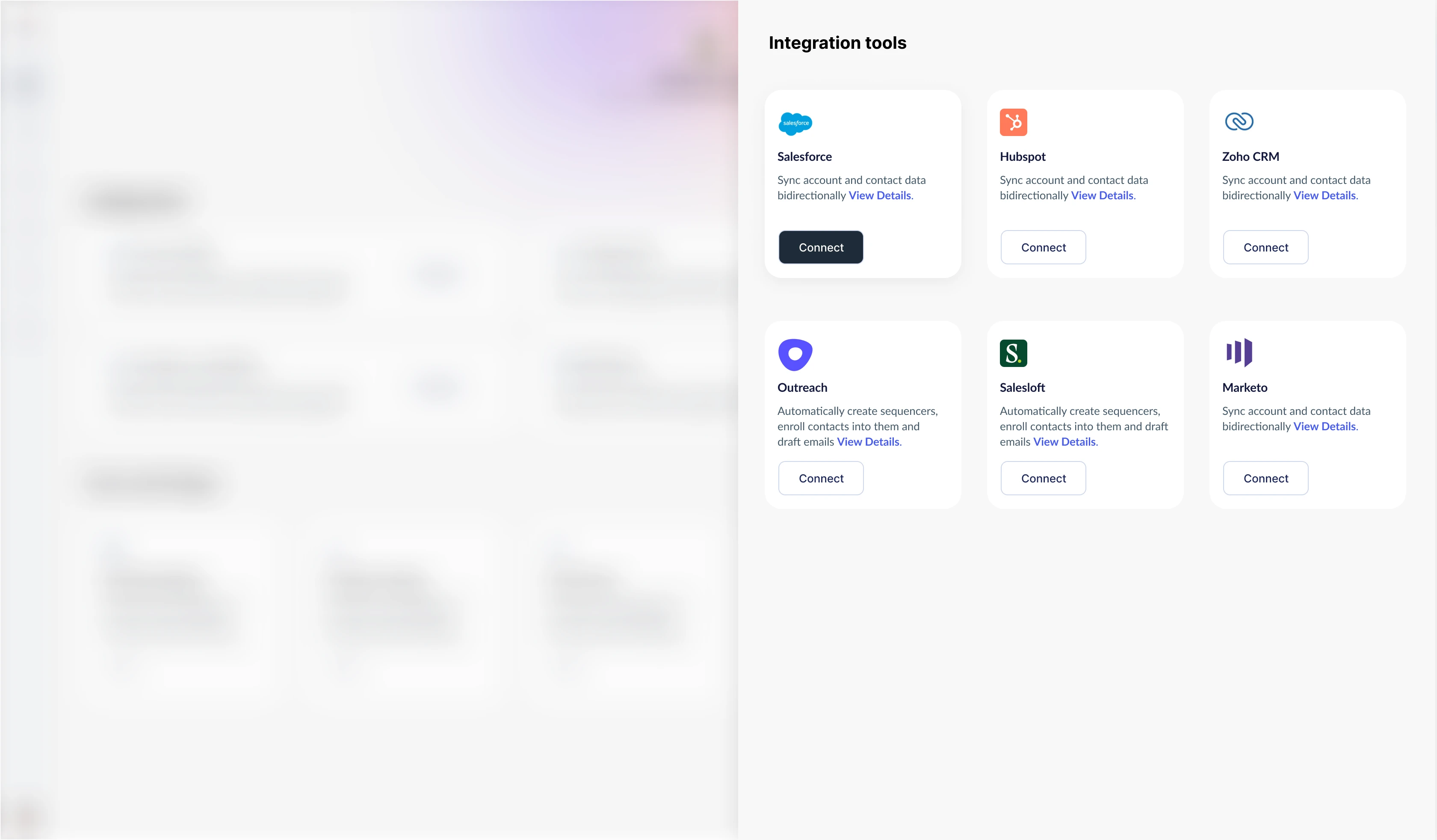
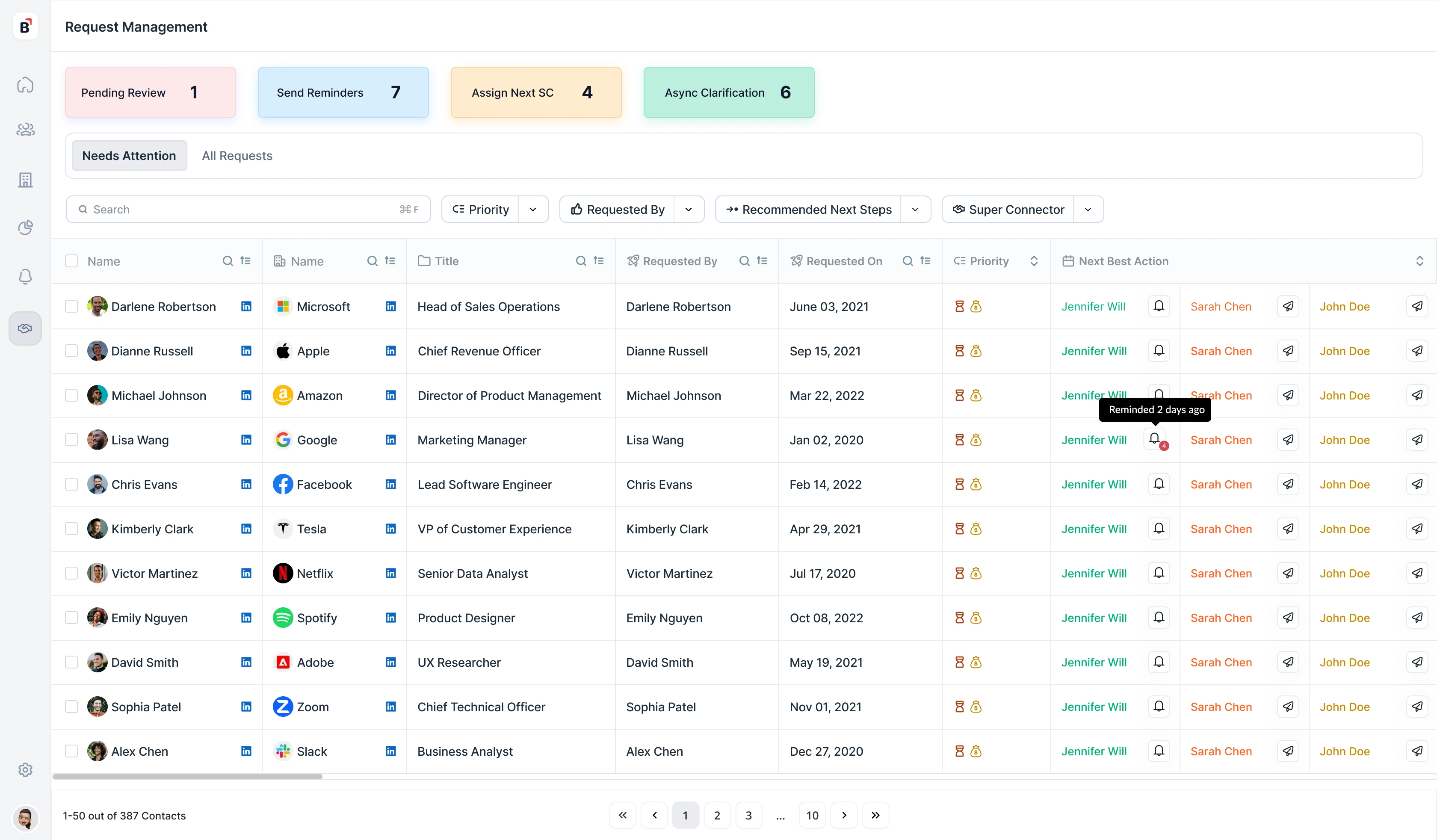
A critical design principle for Boomerang was zero workflow disruption. Rather than forcing teams to adopt another standalone platform, we designed deep, bi-directional integrations with the tools revenue teams use daily.
[Image placeholder - Integration ecosystem diagram showing Boomerang connected to CRM, Outreach, Slack, email]
Integration Philosophy:
- Bi-directional sync: Data flows automatically between Boomerang and CRM (Salesforce, HubSpot)
- Native notifications: Job change alerts delivered via Slack and email where teams already collaborate
- Embedded workflows: Outreach plays export directly to Outreach/Salesloft sequences
- API-first design: Enable custom workflows and future integrations
Key Integration Points:
CRM (Salesforce, HubSpot)
- Real-time contact enrichment and de-duplication
- Automatic relationship mapping from CRM data
- Job change updates sync to contact records
- Custom fields for relationship strength scores

Sales Engagement (Outreach, Salesloft)
- One-click export of warm intro sequences
- Performance data flows back for optimization
- Dynamic personalization tokens with relationship context
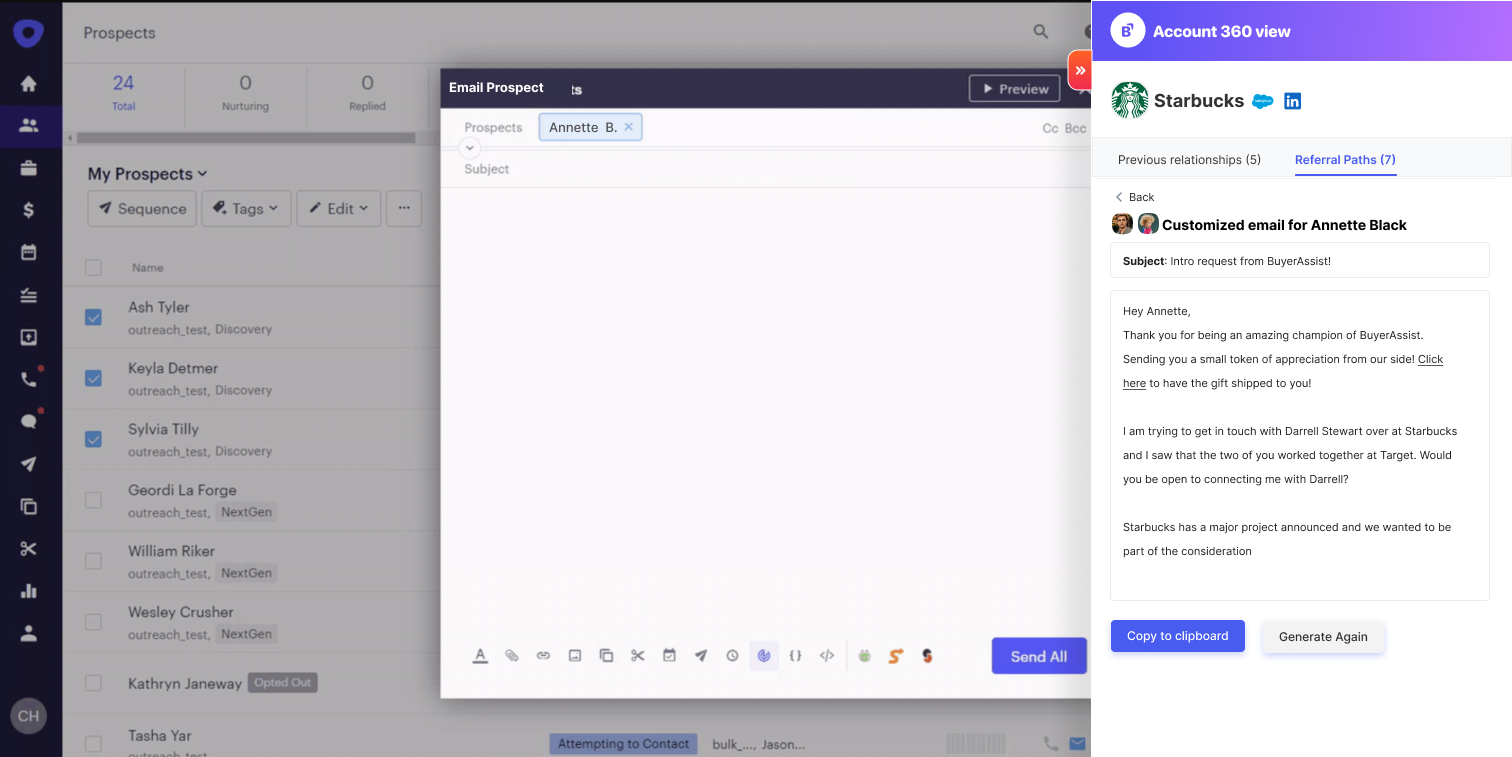
Communication (Slack, Email)
- Job change alerts in dedicated Slack channels
- Intro request workflows via Slack threads
- Automated email drafts with relationship context
- Weekly digest emails with prioritized opportunities
Design Challenge
The biggest challenge was balancing depth of integration with platform flexibility. We needed to be deeply embedded in core workflows (CRM, Outreach) while remaining flexible enough to support various tech stacks. This led to a modular integration architecture where teams could enable/disable specific integrations based on their needs.
NEXT STEPS
Scale and Intelligence
With the core platform launched, the next phase focuses on expanding intelligence capabilities and integration depth.
Key priorities include:
- Automated duplicate detection and merge suggestions
- AI-generated social signal enrichment from broader data sources
- Automated intro recommendation engine for partner networks
- Deeper calendar integrations (Google Calendar, Outlook) for meeting-based relationship signals
- Expanded messaging platform support (Microsoft Teams, Gmail)
- Predictive revenue forecasting based on relationship strength scores
- Advanced buying group analysis and stakeholder mapping
TAKEAWAYS
Working on Boomerang AI from early concept through launch taught me invaluable lessons about designing AI-powered enterprise products. I learned that trust in AI comes from clarity - users need to understand why the system makes recommendations, not just what it suggests. Designing for relationship data required different thinking than static lists; we had to orchestrate complex signals into simple, actionable steps.
Integration as a core design principle: The most critical lesson was that enterprise products succeed or fail based on how well they integrate into existing workflows. We couldn't just build a better mousetrap we had to build one that works inside the tools teams already use. This meant designing not just for our own UI, but for CRM interfaces, Slack notifications, and email drafts. Every feature decision had to answer: "Will this disrupt their workflow or enhance it?"
Most importantly, I learned that the best AI products don't replace human judgment - they augment it. Boomerang doesn't automate relationships; it surfaces the pathways and provides the context so revenue teams can leverage their networks more effectively.
This project reinforced that successful enterprise design requires balancing sophistication with simplicity, automation with transparency, integration depth with platform flexibility, and innovation with familiar workflows.